Technical Case Study: Engineering a High-Fidelity chatbot AI Agent Infrastructure
How I engineered a custom AI stack using n8n, Typebot, and Docker on a VPS.

Technical Case Study: Engineering a High-Fidelity chatbot AI Agent Infrastructure
By: Luis R. | Chatbot Developer & Infrastructure Engineer
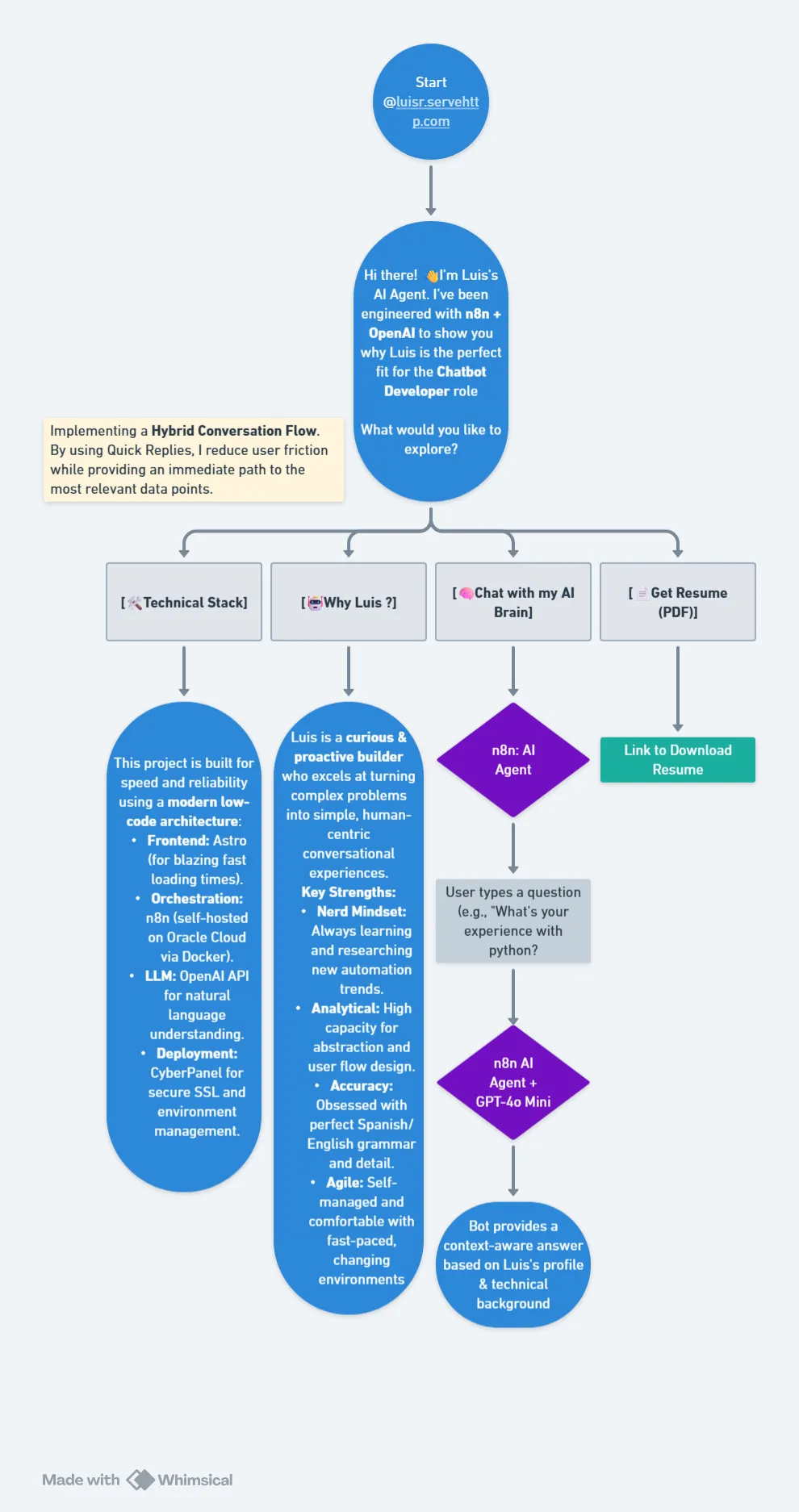
This project demonstrates my ability to bridge the gap between creative conversational design and robust backend engineering. By self-hosting a professional-grade AI ecosystem, I have mastered the complexities of Low-Code orchestration, Linux environments, and API architecture required for modern Chatbot Developer roles.
The Challenge: Beyond “Out of the Box”
While many entry-level developers rely on managed, restricted platforms, I chose to engineer a custom stack using n8n and Typebot on Oracle Cloud (VPS). This approach ensures full data sovereignty and vertical scalability, though it introduces significant infrastructure hurdles that require an “Ultra Instinct” troubleshooting mindset.
Phase 1: Overcoming Installation Constraints
The Problem: Standard installations of orchestration tools often encounter routing conflicts when placed in specific directory structures. Initial attempts led to permission errors and service instability.
The Solution: I pivoted to a subdomain-first architecture. By isolating the logic on a dedicated subdomain, I eliminated directory-level conflicts and established a clean, containerized environment for Docker services.
The Insight: Chatbot development scalability starts with clean infrastructure separation.
Phase 2: Solving the “Invisible” Header Mystery (Nginx & Proxies)
The Problem: A critical failure occurred when connecting the frontend to the backend logic. Despite having SSL active via Cloudflare and CyberPanel, security headers were being stripped. The “Origin” mismatch prevented Webhooks from firing, resulting in a disconnected experience.
The Action: I implemented Nginx as a Reverse Proxy/Intermediary. I manually configured the Nginx environment to explicitly pass vital headers (X-Forwarded-For, X-Real-IP) and managed the handshake between external web traffic and the internal Docker network.
The Result: A rock-solid communication bridge that maintains session integrity and secures the data layer.
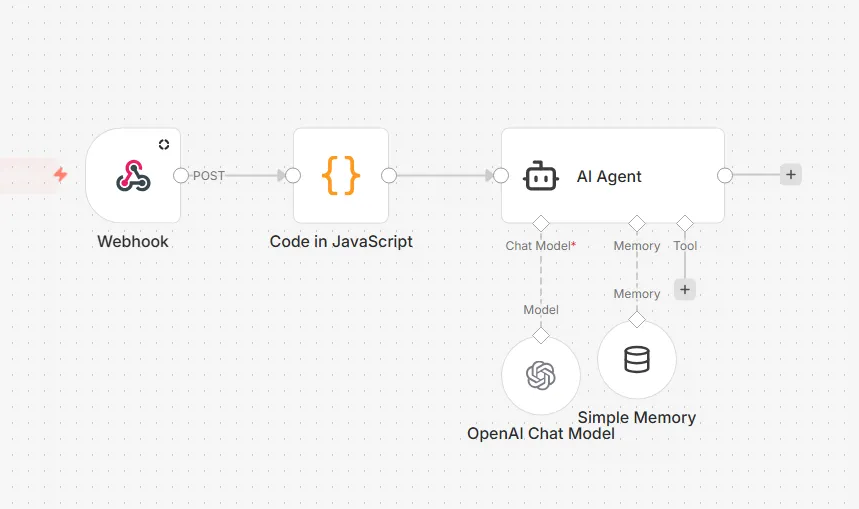
Phase 3: The “CURL” Revelation (Data Mapping & Debugging)
The Problem: The bot was successfully connected, but response bubbles appeared empty. Logs showed a “200 OK” status, yet no data rendered on the UI.
The Action: I used CURL via the terminal to intercept and analyze the raw JSON payload.
The Discovery: The logic looked for a top-level property, but the actual response was nested within a specific object path (data.output).
The Fix: A surgical adjustment to the Property Path resolved the issue instantly.
The Lesson: Debugging with low-level tools like CURL is the most efficient way to ensure data integrity in complex API integrations.
Value Proposition for Chatbot Teams
Through this project, I have proven I possess the technical autonomy and analytical depth necessary for a Chatbot Developer:
-
Infrastructure Mastery: Experience with Docker, VPS management, and Nginx proxies.
-
Analytical Abstraction: Ability to map complex data flows between disparate platforms.
-
Problem-Solving Mindset: A proactive approach to researching and solving technical “roadblocks.”
-
Precision: An obsession with technical accuracy, from SSL configurations to JSON nesting.
I am prepared to apply this technical rigor to build efficient, scalable, and human-centric conversational solutions.